logo
  • Home
  • About
  • Team
  • Portfolio
  • PREMIUM & LUXURY
  • Food & Beverage
  • Community
  • News
  • Careers
  • Contact

THE NEW RULES OF HOTEL INVESTMENT

Hospitality News ME| AUG – OCT 2026


Building resilient assets in complex markets


By Jad Shamseddin, COO, Aleph Hospitality


The hospitality industry has always operated in cycles, but today’s development environment is unusually complex. Rising construction costs, inflation, labor shortages, geopolitical uncertainty, and shifting traveler expectations are all reshaping investment decisions simultaneously. Additionally, financing structures are more demanding, development timelines are longer, and owners are scrutinizing projects more carefully before committing capital.


Hospitality remains one of the world’s most resilient real estate sectors, however the definition of successful hotel development has changed. Investors today are placing greater emphasis on operational resilience, long-term adaptability, and the ability to protect returns across different market conditions.


Across the Middle East and Africa, owners have become more disciplined in evaluating opportunities. The focus is no longer simply on location, brand affiliation, and design appeal. Rather, it is on developing assets that remain financially sustainable over the long term.


That shift is ultimately positive for the industry.


According to JLL’s 2025 Global Hotel Investment Outlook, investors are increasingly prioritizing assets capable of maintaining profitability despite cost inflation and moderating RevPAR growth.


A new investment reality


One of the most significant changes shaping hotel development today is the growing importance of flexibility.

Hotels can no longer rely on a single source of demand. The lines between business travel, leisure travel, extended stays, branded residences and lifestyle hospitality continue to blur. Guests increasingly expect hotels to function as integrated work-life hubs where they can stay, work, meet and dine within the same environment.

This shift has major implications for hotel design and asset planning.

Public areas are becoming more dynamic and revenue-oriented with more flexible commercial spaces, replacing oversized formal lobbies. Meeting spaces increasingly need to function as flexible event venues or coworking areas depending on demand. Food and beverage outlets must appeal to local residents alongside hotel guests. Even guestrooms are evolving, with layouts better suited for longer stays and hybrid working patterns.

The most resilient hotels today are typically those generating revenue from multiple streams rather than relying almost entirely on room revenue.

This is especially important in emerging and complex markets where demand fluctuates significantly. Hotels heavily dependent on a single customer segment often struggle during periods of disruption, while diversified business models create stronger protection for owners and investors.


Designing for operational efficiency


Construction efficiency is another central consideration in development planning. Rising development costs continue to challenge project feasibility globally. Indeed, in some markets, repositioning or converting existing buildings has become more attractive than ground-up developments because they reduce timelines, lower capital exposure, and accelerate market entry.

At the same time, future-proofing is no longer limited to guest experience alone. It is equally about operational efficiency. Efficient back-of-house layouts, optimized room sizing, practical engineering systems and simplified operating models all play a direct role in long-term profitability. Notably, some of the industry’s strongest-performing hotels are the ones designed with execution discipline from the beginning.

Too many projects still prioritize visual impact while underestimating the long-term effect of payroll costs, maintenance complexity, energy consumption, and operational flow. A visually impressive hotel with weak operating fundamentals can quickly become financially challenging for owners.

Labor economics are influencing development decisions more heavily than before. Hotels with overly complex service models or inefficient staffing structures may struggle to maintain margins as labor costs continue to rise across many markets.


Sustainability and profitability are linked


Sustainability performance increasingly influences financing terms, brand approval processes, and long-term asset valuation.

Institutional investors, lenders, and international brands are placing far greater emphasis on ESG integration: Meanwhile, utility costs continue to increase across many regions. Hotels that fail to integrate sustainability measures early in the development process often face significantly higher operating costs later.

Efficient cooling systems, water-saving technologies, smart building management systems, solar integration and durable materials all have a measurable impact on asset performance. In several African markets, energy efficiency is not simply an environmental objective. It is an operational necessity.

The future of hospitality will increasingly require developers to balance guest wellbeing, employee wellbeing, and environmental responsibility within the same investment strategy.


Technology must support operations


Technology investment is becoming increasingly important in determining both operational performance and guest expectations.

The most effective hotels are those that use technology intelligently to simplify operations, improve decision-making and enhance the guest experience without adding unnecessary complexity.

Owners today expect far greater visibility into forecasting accuracy, labor productivity, energy consumption and commercial performance. Hotels lacking proper digital infrastructure are increasingly at a competitive disadvantage.

At the same time, hospitality remains fundamentally people-driven, particularly across the Middle East and Africa where personalized service continues to play a major role in guest loyalty and brand perception.

The objective should be smart hospitality supported by technology, with human connection remaining at the center of the experience.


The geography of growth is expanding


Location strategy is also changing.

For years, development activity focused heavily on gateway cities and established luxury destinations. While those markets remain important, strong opportunities are emerging in secondary cities, mixed-use developments, airport corridors, and underserved domestic travel markets.

For many investors, these markets offer lower development costs, reduced competitive supply and sustained domestic demand growth. Together, these combine to create more potential than saturated gateway destinations.

Regional infrastructure investment, expanding connectivity and younger demographics are creating new hospitality demand corridors that barely existed a decade ago.

In Africa, especially, the pattern is shifting. Future growth may come less from ultra-luxury projects and more from disciplined midscale and upper-midscale developments with efficient operating models and strong commercial distribution.


Future-proofing starts before opening day


Perhaps the most important lesson is that future-proofing starts long before opening day.

The operator, brand, technical services team, and commercial strategy must be aligned from the earliest stages of development. Too often, operational realities are considered too late in the process, creating inefficiencies that remain embedded throughout the life of the asset.

The strongest hotel developments are rarely the most excessive. They are usually the most disciplined. Successful projects understand their positioning clearly, build around realistic demand assumptions, prioritize operational efficiency, and remain flexible enough to adapt to changing traveler behavior and market conditions.

In the next development cycle, the strongest-performing hotel assets will likely be those built around flexibility, disciplined execution, and sustainable operating performance rather than short-term market optimism.

  • "
  • "
  • "
  • "
  • "
  • "

Blogs

  • imagef

    THE NEW RULES OF HOTEL INVESTMENT

    24/08/2026
  • imagef

    LOCAL KNOWLEDGE, GLOBAL STANDARDS: INSIDE ALEPH HOSPITALITY’S NORTH AFRICA STRATEGY

    20/08/2026
  • imagef

    ALEPH’S LEADERSHIP DEVELOPMENT PROGRAMME 2027 COHORT

    22/06/2026
  • imagef

    FRANCHISING FRAMEWORKS FOR A NEW ERA OF INVESTMENT

    27/02/2026
  • imagef

    LEADERSHIP, CULTURE, AND GROWTH: INSIDE ALEPH HOSPITALITY’S PEOPLE STRATEGY

    23/02/2026
  • imagef

    THE SHIFT IN MEA HOTEL MANAGEMENT MODELS: NEW OPTIONS EMERGE

    20/11/2025
  • imagef

    FROM INNOVATION LAB MENTEE TO INDUSTRY SUCCESS

    14/11/2025
  • imagef

    REFORMS IN HOSPITALITY FINANCING ‘KEY TO UNLOCKING POTENTIAL’ – ALEPH’S BANI HADDAD

    08/07/2025
  • imagef

    ALEPH HOSPITALITY DOUBLES AFRICAN PORTFOLIO, EYES ONE HUNDRED HOTELS BY 2029 IN BOLD EXPANSION STRATEGY

    10/07/2025
  • imagef

    IGNITING INNOVATION IN HOSPITALITY

    13/07/2025
  • imagef

    MIDSCALE MOMENTUM: WHY INVESTORS ARE BETTING ON THE MIDDLE GROUND

    01/08/2025
  • imagef

    APPLICATIONS ARE NOW OPEN FOR OUR INNOVATION LAB

    09/09/2025
  • imagef

    10 YEARS OF EXCELLENCE IN HOSPITALITY

    04/09/2025
  • imagef

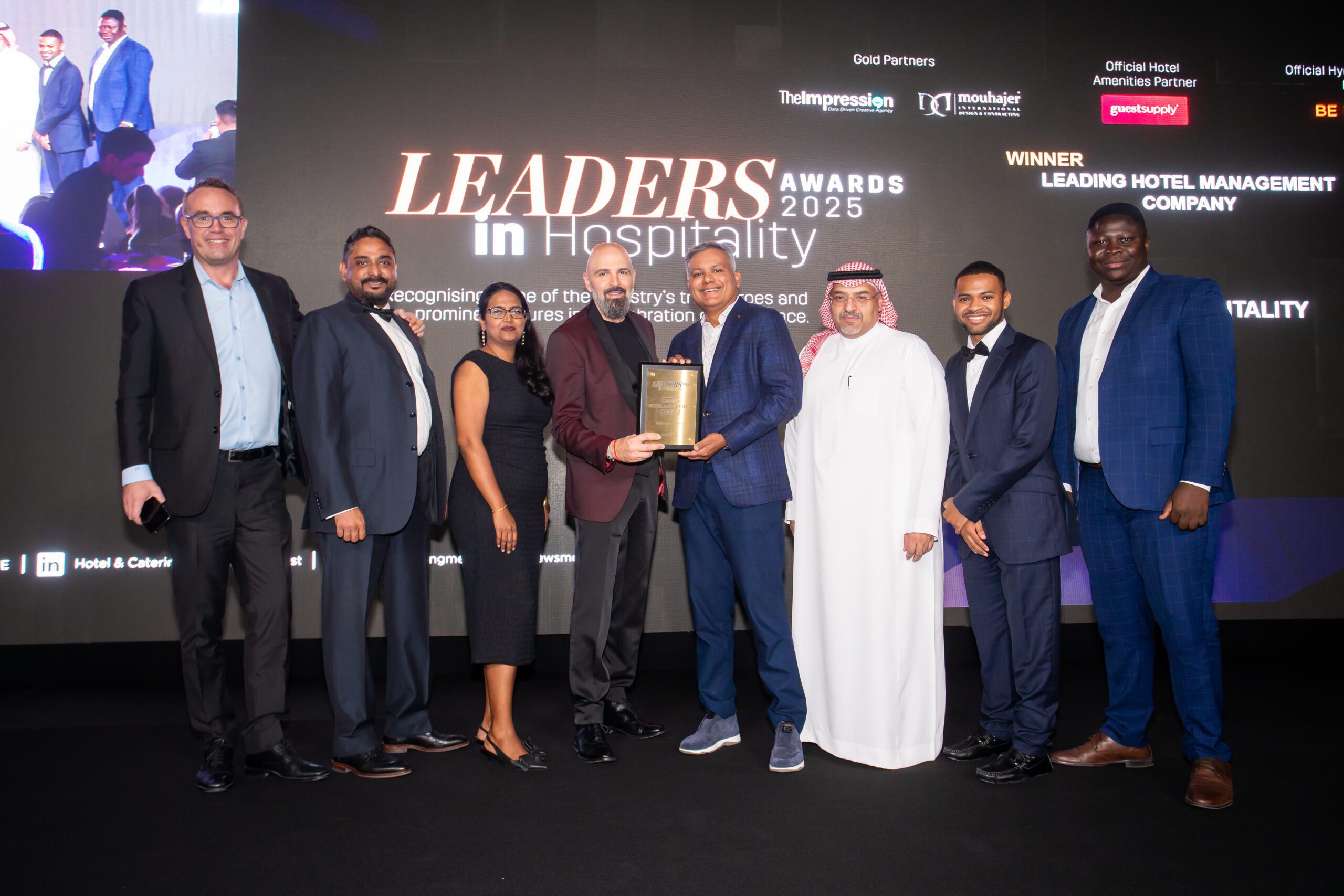
    LEADING HOTEL MANAGEMENT COMPANY 2025

    05/05/2025
  • imagef

    FIVE FRANCHISE TRENDS TO WATCH IN 2025

    01/02/2025
  • imagef

    ALEPH’S LEADERSHIP DEVELOPMENT PROGRAMME

    04/12/2024
  • imagef

    BUILDING A SUSTAINABLE HOTEL PORTFOLIO BY ALEPH HOSPITALITY

    12/11/2024
  • imagef

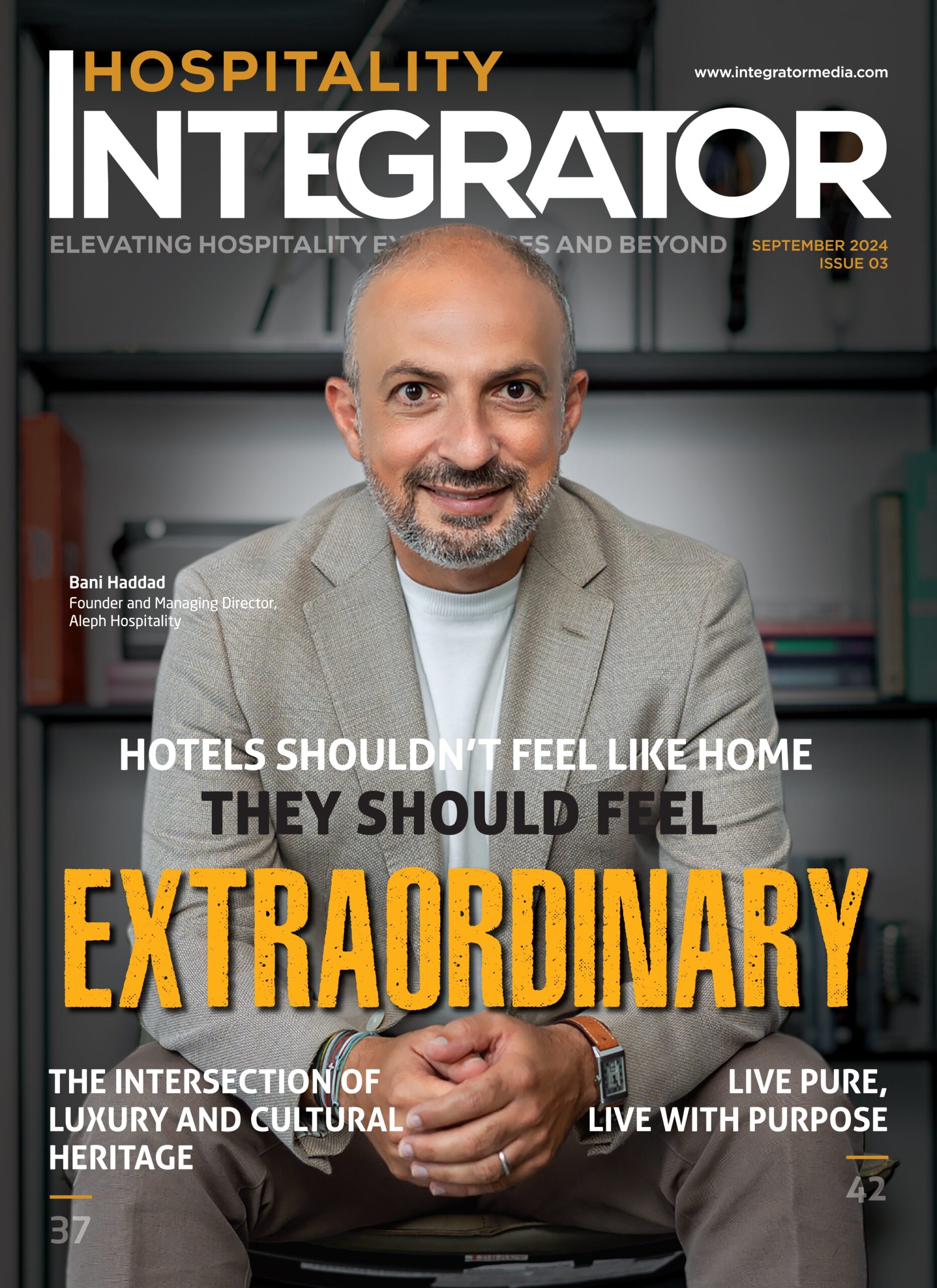
    HOTELS SHOULDN’T FEEL LIKE HOME THEY SHOULD FEEL EXTRAORDINARY

    24/10/2024
  • imagef

    WHY THIRD-PARTY OPERATOR CONTRACTS ARE GAINING TRACTION

    12/09/2024
  • imagef

    Q&A INTERVIEW WITH JAD SHAMSEDDIN, COO OF ALEPH HOSPITALITY

    30/08/2024
  • imagef

    THREE WAYS TO IMPROVE ONLINE FACILITATION IN THE WORKPLACE

    15/04/2024
  • imagef

    INTERVIEW WITH ASSIA RICCIO, FOUNDER OF EVOLVIN’ WOMEN

    27/03/2024
  • imagef

    RIBBON CUTTING CEREMONY AT MARRIOTT MARQUIS DUBAI WITH ALEPH HOSPITALITY

    25/03/2024
  • imagef

    WHY INVESTING IN HOSPITALITY TODAY IS A MUST FOR SUCCESS TOMORROW

    25/02/2024
  • imagef

    ALEPH CARES – BUILDING A SUSTAINABLE LEGACY IN AFRICA

    12/02/2024
  • imagef

    FROM STARTING OUT TO STAYING THE COURSE

    19/01/2024
  • imagef

    BUILDING A CULTURE AROUND AN ESG STRATEGY IS NOT A LINEAR PROCESS

    07/12/2023
  • imagef

    THE INNOVATION LAB BY ALEPH HOSPITALITY

    08/11/2023
  • imagef

    SUSTAINABILITY KEY TO HOSPITALITY

    07/11/2023
  • imagef

    Cornell Hotel Society

    28/08/2023
  • imagef

    BUILDING ON A BRIGHT FUTURE

    24/08/2023
  • imagef

    WHAT DO GUESTS REALLY WANT?

    25/04/2023
  • imagef

    CREATING A CULTURE OF CONTINUOUS LEARNING AND CURIOSITY

    05/05/2023
  • imagef

    LIST OF ACCOLADES AND INDUSTRY RECOGNITION FOR ALEPH HOSPITALITY

    15/05/2023
logo.png
The largest independent hotel
management company in the Middle East
& Africa
Follow us
  • Privacy Policy
  • Terms of use
  • Legal
  • Sitemap

  • Call us

    +97142436222

  • Email us

    info@alephhospitality.com

  • Visit us

    Jumeirah Lake Towers,
    Mazaya Business Avenue BB2,
    Office 3203/04 PO Box 941044,
    Dubai, UAE

    • Visit Map
  • Home
  • About
  • Team
  • Portfolio
  • PREMIUM & LUXURY
  • Food & Beverage
  • Community
  • News
  • Careers
  • Contact

©2026 All Rights Reserved